Buy cetatenie-primesc.eu ?
We are moving the project
cetatenie-primesc.eu .
Are you interested in purchasing the domain
cetatenie-primesc.eu ?
domain@kv-gmbh.de · 0541-91531010
Buy cetatenie-primesc.eu ?
How are Latin subjunctive subordinate clauses still translated with the subjunctive?
Latin subjunctive subordinate clauses are still translated with the subjunctive in English to convey the same sense of uncertainty, possibility, or doubt. In English, the subjunctive mood is used to express hypothetical or unreal situations, wishes, recommendations, or demands. Therefore, when translating Latin subjunctive subordinate clauses, the English subjunctive is used to maintain the same mood and meaning of the original Latin sentence. **
Perhaps, subjunctive or indicative?
The choice between subjunctive or indicative depends on the context of the sentence. The subjunctive mood is used to express hypothetical or uncertain situations, wishes, recommendations, or doubts. On the other hand, the indicative mood is used for statements of fact or certainty. Therefore, if the sentence is expressing a possibility, doubt, or desire, the subjunctive mood would be more appropriate. **


Similar search terms for Subjunctive
Top-Angebote
Products related to Subjunctive:
-
Women's Women's Snoopy Passport Bag Travel Crossbody Purse Woodstock Passport Bag Gray by Peanuts in Gray (Size ONE SIZE)This officially licensed Peanuts Snoopy crossbody bag features a playful all-over print of Snoopy and Woodstock on a durable grey fabric, making it an essential travel purse for any fan. The compact and lightweight design functions perfectly as a...24,00 $*Shipping: 0,00 $Secure redirect to the provider
-
WD My Passport 1TB Portable Hard Drive - BlackWestern Digital My Passport 1TB portable external hard drive, 2.5-inch, USB 3.2 Gen 1 (USB 3.0) with a USB-A cable. Includes WD Backup software and 256-bit AES hardware encryption with password protection. Black.134,49 £*Shipping: 0,00 £Secure redirect to the provider
-
WD My Passport 2TB Portable Hard Drive - BlackAbout this productThe My Passport drive is trusted, portable storage that gives you the confidence and freedom to drive forward in life. With a new, stylish design that fits in the palm of your hand, there's space to store, organise, and share your photos, videos, music, and documents. Perfectly paired with WD Backup software & password protection, the My Passport drive helps keep your digital life's contents safe. There's no telling what's ahead in your own journey. That's why WD builds drives150,99 £*Shipping: 0,00 £Secure redirect to the provider
-
WD My Passport 6TB Portable Hard Drive - BlackThe WD My Passport 6TB (WDBR9S0060BBK-WESN) is a portable external hard drive in black. It connects over USB 3.2 Gen 1 (5Gbps) using a Micro-B port and is supplied with a USB cable. The drive supports password protection with 256-bit AES hardware encryption and comes with WD backup software. It is formatted exFAT for use with Windows and Mac computers.268,49 £*Shipping: 0,00 £Secure redirect to the provider


-
Maybe subjunctive or indicative?
The choice between subjunctive or indicative depends on the context of the sentence. The subjunctive mood is used to express doubt, uncertainty, desire, or hypothetical situations, while the indicative mood is used for statements of fact or certainty. To determine whether to use subjunctive or indicative, consider the verb's relationship to reality and whether it is expressing a fact or a possibility. **
-
Conditional, subjunctive or indicative?
The choice between conditional, subjunctive, or indicative mood depends on the context of the sentence. The conditional mood is used to express a hypothetical situation or a condition that is dependent on something else happening. The subjunctive mood is used to express wishes, recommendations, or possibilities. The indicative mood is used to state facts or ask questions. **
-
What is the use of the present subjunctive and the past subjunctive?
The present subjunctive is used to express desires, doubts, wishes, or hypothetical situations in the present or future. It is often used after certain verbs and conjunctions that indicate uncertainty or subjectivity. The past subjunctive, on the other hand, is used to express desires, doubts, wishes, or hypothetical situations in the past. It is often used in the same way as the present subjunctive, but in reference to past events or situations. Both subjunctive forms are used to convey uncertainty or subjectivity in a sentence. **
-
Are the subjunctive I and the subjunctive II present in all tenses?
No, the subjunctive I and subjunctive II are not present in all tenses. The subjunctive I is only present in the present tense, while the subjunctive II is present in the past tense. The subjunctive I is used to express wishes, suggestions, or hypothetical situations in the present, while the subjunctive II is used to express wishes, suggestions, or hypothetical situations in the past. Each tense has its own specific form of the subjunctive mood. **

'It is strange that + subjunctive'
It is strange that she should be so calm in such a chaotic situation. **
When is the subjunctive used?
The subjunctive is used to express desires, doubts, wishes, possibilities, recommendations, or hypothetical situations. It is often used in dependent clauses following certain verbs or expressions that convey these meanings. The subjunctive mood is used to show uncertainty or subjectivity in a sentence, rather than stating a fact or certainty. It is important to pay attention to the context and the verb that triggers the use of the subjunctive in order to use it correctly. **
Top-Angebote
Products related to Subjunctive:
-
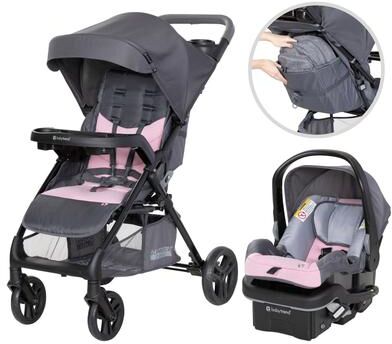
Baby Trend Passport Carriage Stroller, Ultra BlackWhether it's cozy or time for a stroll, Baby Trend's got you covered! The Passport Carriage Stroller offers a carriage mode option that allows your baby to have the comfort of an in-home carriage wherever you go.154,99 $*Shipping: 0,00 $Secure redirect to the provider
-
Women's Women's Snoopy Passport Bag Travel Crossbody Purse Woodstock Passport Bag Gray by Peanuts in Gray (Size ONE SIZE)This officially licensed Peanuts Snoopy crossbody bag features a playful all-over print of Snoopy and Woodstock on a durable grey fabric, making it an essential travel purse for any fan. The compact and lightweight design functions perfectly as a...24,00 $*Shipping: 0,00 $Secure redirect to the provider
-
WD My Passport 1TB Portable Hard Drive - BlackWestern Digital My Passport 1TB portable external hard drive, 2.5-inch, USB 3.2 Gen 1 (USB 3.0) with a USB-A cable. Includes WD Backup software and 256-bit AES hardware encryption with password protection. Black.134,49 £*Shipping: 0,00 £Secure redirect to the provider
-
How are Latin subjunctive subordinate clauses still translated with the subjunctive?
Latin subjunctive subordinate clauses are still translated with the subjunctive in English to convey the same sense of uncertainty, possibility, or doubt. In English, the subjunctive mood is used to express hypothetical or unreal situations, wishes, recommendations, or demands. Therefore, when translating Latin subjunctive subordinate clauses, the English subjunctive is used to maintain the same mood and meaning of the original Latin sentence. **
-
Perhaps, subjunctive or indicative?
The choice between subjunctive or indicative depends on the context of the sentence. The subjunctive mood is used to express hypothetical or uncertain situations, wishes, recommendations, or doubts. On the other hand, the indicative mood is used for statements of fact or certainty. Therefore, if the sentence is expressing a possibility, doubt, or desire, the subjunctive mood would be more appropriate. **
-
Maybe subjunctive or indicative?
The choice between subjunctive or indicative depends on the context of the sentence. The subjunctive mood is used to express doubt, uncertainty, desire, or hypothetical situations, while the indicative mood is used for statements of fact or certainty. To determine whether to use subjunctive or indicative, consider the verb's relationship to reality and whether it is expressing a fact or a possibility. **
-
Conditional, subjunctive or indicative?
The choice between conditional, subjunctive, or indicative mood depends on the context of the sentence. The conditional mood is used to express a hypothetical situation or a condition that is dependent on something else happening. The subjunctive mood is used to express wishes, recommendations, or possibilities. The indicative mood is used to state facts or ask questions. **
Similar search terms for Subjunctive
-
WD My Passport 2TB Portable Hard Drive - BlackAbout this productThe My Passport drive is trusted, portable storage that gives you the confidence and freedom to drive forward in life. With a new, stylish design that fits in the palm of your hand, there's space to store, organise, and share your photos, videos, music, and documents. Perfectly paired with WD Backup software & password protection, the My Passport drive helps keep your digital life's contents safe. There's no telling what's ahead in your own journey. That's why WD builds drives150,99 £*Shipping: 0,00 £Secure redirect to the provider
-
WD My Passport 6TB Portable Hard Drive - BlackThe WD My Passport 6TB (WDBR9S0060BBK-WESN) is a portable external hard drive in black. It connects over USB 3.2 Gen 1 (5Gbps) using a Micro-B port and is supplied with a USB cable. The drive supports password protection with 256-bit AES hardware encryption and comes with WD backup software. It is formatted exFAT for use with Windows and Mac computers.268,49 £*Shipping: 0,00 £Secure redirect to the provider
-
WD My Passport Portable External SSD - 1TB, Space GreyThe WD My Passport portable SSD is a 1 TB external NVMe solid state drive in a space grey metal casing. It connects over USB-C (USB 3.2 Gen 2, up to 10 Gbps) with read speeds of up to 1,050 MB/s and write speeds of up to 1,000 MB/s.256-bit AES hardware encryption with password protectionShock, vibration and drop resistantSupplied with a USB-C to USB-C cable and a USB-C to USB-A adapter5-year limited manufacturer warranty212,99 £*Shipping: 0,00 £Secure redirect to the provider
-
What is the use of the present subjunctive and the past subjunctive?
The present subjunctive is used to express desires, doubts, wishes, or hypothetical situations in the present or future. It is often used after certain verbs and conjunctions that indicate uncertainty or subjectivity. The past subjunctive, on the other hand, is used to express desires, doubts, wishes, or hypothetical situations in the past. It is often used in the same way as the present subjunctive, but in reference to past events or situations. Both subjunctive forms are used to convey uncertainty or subjectivity in a sentence. **
-
Are the subjunctive I and the subjunctive II present in all tenses?
No, the subjunctive I and subjunctive II are not present in all tenses. The subjunctive I is only present in the present tense, while the subjunctive II is present in the past tense. The subjunctive I is used to express wishes, suggestions, or hypothetical situations in the present, while the subjunctive II is used to express wishes, suggestions, or hypothetical situations in the past. Each tense has its own specific form of the subjunctive mood. **
-
'It is strange that + subjunctive'
It is strange that she should be so calm in such a chaotic situation. **
-
When is the subjunctive used?
The subjunctive is used to express desires, doubts, wishes, possibilities, recommendations, or hypothetical situations. It is often used in dependent clauses following certain verbs or expressions that convey these meanings. The subjunctive mood is used to show uncertainty or subjectivity in a sentence, rather than stating a fact or certainty. It is important to pay attention to the context and the verb that triggers the use of the subjunctive in order to use it correctly. **
* All prices are inclusive of VAT and, if applicable, plus shipping costs. The offer information is based on the details provided by the respective shop and is updated through automated processes. Real-time updates do not occur, so deviations can occur in individual cases. ** Note: Parts of this content were created by AI.