Buy cetatenie-primesc.eu ?
We are moving the project
cetatenie-primesc.eu .
Are you interested in purchasing the domain
cetatenie-primesc.eu ?
domain@kv-gmbh.de · 0541-91531010
Buy cetatenie-primesc.eu ?
What are crystal nuclei?
Crystal nuclei are the initial building blocks of a crystal structure. They are formed when atoms or molecules come together in a specific arrangement that is repeated in a regular pattern to form a crystal lattice. These nuclei serve as the starting point for crystal growth, with additional atoms or molecules attaching to them to further expand the crystal structure. The size and shape of crystal nuclei can influence the overall growth and properties of the crystal. **
Why is energy released when heavy nuclei split and light nuclei fuse?
Energy is released when heavy nuclei split in a process called nuclear fission because the total mass of the resulting nuclei is less than the original nucleus, and this mass difference is converted into energy according to Einstein's famous equation E=mc^2. Similarly, energy is released when light nuclei fuse in a process called nuclear fusion because the resulting nucleus is more stable than the original nuclei, and the excess energy is released in the form of kinetic energy and radiation. Both nuclear fission and fusion involve changes in nuclear binding energies, leading to the release of energy. **


Similar search terms for Nuclei
Top-Angebote
Products related to Nuclei:
-
Baby Trend Passport Carriage Stroller, Ultra BlackWhether it's cozy or time for a stroll, Baby Trend's got you covered! The Passport Carriage Stroller offers a carriage mode option that allows your baby to have the comfort of an in-home carriage wherever you go.154,99 $*Shipping: 0,00 $Secure redirect to the provider
-
Women's Women's Snoopy Passport Bag Travel Crossbody Purse Woodstock Passport Bag Gray by Peanuts in Gray (Size ONE SIZE)This officially licensed Peanuts Snoopy crossbody bag features a playful all-over print of Snoopy and Woodstock on a durable grey fabric, making it an essential travel purse for any fan. The compact and lightweight design functions perfectly as a...24,00 $*Shipping: 0,00 $Secure redirect to the provider
-
WD My Passport 6TB Portable Hard Drive - BlackThe WD My Passport 6TB (WDBR9S0060BBK-WESN) is a portable external hard drive in black. It connects over USB 3.2 Gen 1 (5Gbps) using a Micro-B port and is supplied with a USB cable. The drive supports password protection with 256-bit AES hardware encryption and comes with WD backup software. It is formatted exFAT for use with Windows and Mac computers.274,49 £*Shipping: 0,00 £Secure redirect to the provider
-
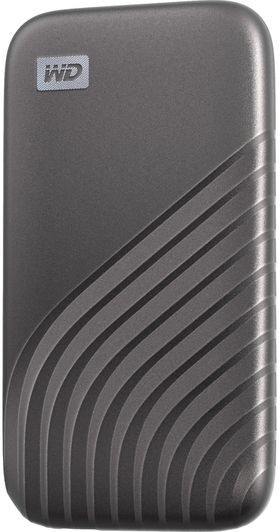
WD My Passport Portable External SSD - 1TB, Space GreyThe WD My Passport portable SSD is a 1 TB external NVMe solid state drive in a space grey metal casing. It connects over USB-C (USB 3.2 Gen 2, up to 10 Gbps) with read speeds of up to 1,050 MB/s and write speeds of up to 1,000 MB/s.256-bit AES hardware encryption with password protectionShock, vibration and drop resistantSupplied with a USB-C to USB-C cable and a USB-C to USB-A adapter5-year limited manufacturer warranty212,99 £*Shipping: 0,00 £Secure redirect to the provider


-
Why is energy released when heavy nuclei split and when light nuclei fuse?
Energy is released when heavy nuclei split (fission) because the resulting nuclei are more stable and have lower binding energy per nucleon. This excess energy is released in the form of kinetic energy and radiation. Similarly, energy is released when light nuclei fuse (fusion) because the resulting nucleus is also more stable and has a higher binding energy per nucleon. This excess energy is also released in the form of kinetic energy and radiation. **
-
What charge do helium nuclei have?
Helium nuclei, also known as alpha particles, have a positive charge of +2. This means they have two protons, which are positively charged, and no electrons, which are negatively charged. As a result, helium nuclei are positively charged and are attracted to negatively charged particles. **
-
Why don't atomic nuclei fall apart?
Atomic nuclei don't fall apart because of the strong nuclear force, which is one of the four fundamental forces of nature. This force is responsible for holding the protons and neutrons together in the nucleus, overcoming the electromagnetic repulsion between the positively charged protons. The strong nuclear force is much stronger than the electromagnetic force at short distances, which allows it to keep the nucleus stable. Additionally, the presence of neutrons in the nucleus also helps to stabilize it by adding to the attractive nuclear force without adding to the electromagnetic repulsion. **
-
What are atomic nuclei and cations?
Atomic nuclei are the central part of an atom, containing protons and neutrons. The number of protons in the nucleus determines the element's identity, while the number of neutrons can vary, creating different isotopes of the same element. Cations are positively charged ions that are formed when an atom loses one or more electrons. This loss of electrons creates an imbalance between the number of protons and electrons, resulting in a net positive charge. **

Why is energy released during the splitting of heavy nuclei and the fusion of lighter nuclei?
Energy is released during the splitting of heavy nuclei (nuclear fission) and the fusion of lighter nuclei (nuclear fusion) due to the difference in binding energy per nucleon between the initial and final nuclei. In nuclear fission, heavy nuclei split into smaller, more stable nuclei, releasing energy in the process. This is because the total binding energy of the resulting nuclei is greater than that of the original nucleus. In nuclear fusion, lighter nuclei combine to form a heavier, more stable nucleus, releasing energy as the new nucleus has a higher binding energy per nucleon. **
Why is the relative proportion of neutrons greater in large atomic nuclei than in small atomic nuclei?
The relative proportion of neutrons is greater in large atomic nuclei than in small atomic nuclei because the strong nuclear force, which holds the nucleus together, is not as effective in larger nuclei. As the number of protons increases, the electromagnetic repulsion between them also increases, requiring more neutrons to provide additional strong nuclear force to counteract this repulsion and stabilize the nucleus. Additionally, the presence of more neutrons helps to increase the overall binding energy of the nucleus, making it more stable. Therefore, larger atomic nuclei require a greater proportion of neutrons to maintain stability. **
Top-Angebote
Products related to Nuclei:
-
Baby Trend Passport Carriage Stroller, Ultra BlackWhether it's cozy or time for a stroll, Baby Trend's got you covered! The Passport Carriage Stroller offers a carriage mode option that allows your baby to have the comfort of an in-home carriage wherever you go.154,99 $*Shipping: 0,00 $Secure redirect to the provider
-
Women's Women's Snoopy Passport Bag Travel Crossbody Purse Woodstock Passport Bag Gray by Peanuts in Gray (Size ONE SIZE)This officially licensed Peanuts Snoopy crossbody bag features a playful all-over print of Snoopy and Woodstock on a durable grey fabric, making it an essential travel purse for any fan. The compact and lightweight design functions perfectly as a...24,00 $*Shipping: 0,00 $Secure redirect to the provider
-
What are crystal nuclei?
Crystal nuclei are the initial building blocks of a crystal structure. They are formed when atoms or molecules come together in a specific arrangement that is repeated in a regular pattern to form a crystal lattice. These nuclei serve as the starting point for crystal growth, with additional atoms or molecules attaching to them to further expand the crystal structure. The size and shape of crystal nuclei can influence the overall growth and properties of the crystal. **
-
Why is energy released when heavy nuclei split and light nuclei fuse?
Energy is released when heavy nuclei split in a process called nuclear fission because the total mass of the resulting nuclei is less than the original nucleus, and this mass difference is converted into energy according to Einstein's famous equation E=mc^2. Similarly, energy is released when light nuclei fuse in a process called nuclear fusion because the resulting nucleus is more stable than the original nuclei, and the excess energy is released in the form of kinetic energy and radiation. Both nuclear fission and fusion involve changes in nuclear binding energies, leading to the release of energy. **
-
Why is energy released when heavy nuclei split and when light nuclei fuse?
Energy is released when heavy nuclei split (fission) because the resulting nuclei are more stable and have lower binding energy per nucleon. This excess energy is released in the form of kinetic energy and radiation. Similarly, energy is released when light nuclei fuse (fusion) because the resulting nucleus is also more stable and has a higher binding energy per nucleon. This excess energy is also released in the form of kinetic energy and radiation. **
-
What charge do helium nuclei have?
Helium nuclei, also known as alpha particles, have a positive charge of +2. This means they have two protons, which are positively charged, and no electrons, which are negatively charged. As a result, helium nuclei are positively charged and are attracted to negatively charged particles. **
Similar search terms for Nuclei
-
WD My Passport 6TB Portable Hard Drive - BlackThe WD My Passport 6TB (WDBR9S0060BBK-WESN) is a portable external hard drive in black. It connects over USB 3.2 Gen 1 (5Gbps) using a Micro-B port and is supplied with a USB cable. The drive supports password protection with 256-bit AES hardware encryption and comes with WD backup software. It is formatted exFAT for use with Windows and Mac computers.274,49 £*Shipping: 0,00 £Secure redirect to the provider
-
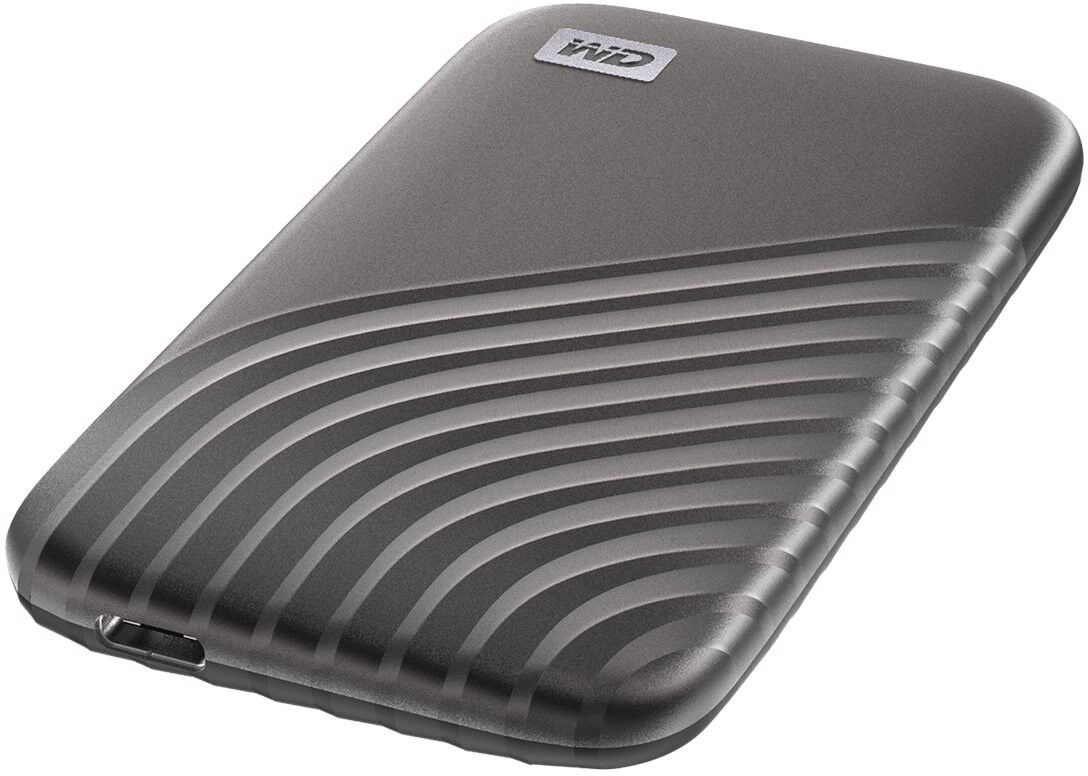
WD My Passport Portable External SSD - 1TB, Space GreyThe WD My Passport portable SSD is a 1 TB external NVMe solid state drive in a space grey metal casing. It connects over USB-C (USB 3.2 Gen 2, up to 10 Gbps) with read speeds of up to 1,050 MB/s and write speeds of up to 1,000 MB/s.256-bit AES hardware encryption with password protectionShock, vibration and drop resistantSupplied with a USB-C to USB-C cable and a USB-C to USB-A adapter5-year limited manufacturer warranty212,99 £*Shipping: 0,00 £Secure redirect to the provider
-
WD My Passport Portable External SSD - 2TB, Space GreyThe WD My Passport portable SSD is a 2 TB external NVMe solid state drive in a space grey metal casing. It connects over USB-C (USB 3.2 Gen 2, up to 10 Gbps) with read speeds of up to 1,050 MB/s and write speeds of up to 1,000 MB/s.256-bit AES hardware encryption with password protectionShock and vibration resistantSupplied with a USB-C to USB-C cable and a USB-C to USB-A adapter5-year limited manufacturer warranty334,49 £*Shipping: 0,00 £Secure redirect to the provider
-
Why don't atomic nuclei fall apart?
Atomic nuclei don't fall apart because of the strong nuclear force, which is one of the four fundamental forces of nature. This force is responsible for holding the protons and neutrons together in the nucleus, overcoming the electromagnetic repulsion between the positively charged protons. The strong nuclear force is much stronger than the electromagnetic force at short distances, which allows it to keep the nucleus stable. Additionally, the presence of neutrons in the nucleus also helps to stabilize it by adding to the attractive nuclear force without adding to the electromagnetic repulsion. **
-
What are atomic nuclei and cations?
Atomic nuclei are the central part of an atom, containing protons and neutrons. The number of protons in the nucleus determines the element's identity, while the number of neutrons can vary, creating different isotopes of the same element. Cations are positively charged ions that are formed when an atom loses one or more electrons. This loss of electrons creates an imbalance between the number of protons and electrons, resulting in a net positive charge. **
-
Why is energy released during the splitting of heavy nuclei and the fusion of lighter nuclei?
Energy is released during the splitting of heavy nuclei (nuclear fission) and the fusion of lighter nuclei (nuclear fusion) due to the difference in binding energy per nucleon between the initial and final nuclei. In nuclear fission, heavy nuclei split into smaller, more stable nuclei, releasing energy in the process. This is because the total binding energy of the resulting nuclei is greater than that of the original nucleus. In nuclear fusion, lighter nuclei combine to form a heavier, more stable nucleus, releasing energy as the new nucleus has a higher binding energy per nucleon. **
-
Why is the relative proportion of neutrons greater in large atomic nuclei than in small atomic nuclei?
The relative proportion of neutrons is greater in large atomic nuclei than in small atomic nuclei because the strong nuclear force, which holds the nucleus together, is not as effective in larger nuclei. As the number of protons increases, the electromagnetic repulsion between them also increases, requiring more neutrons to provide additional strong nuclear force to counteract this repulsion and stabilize the nucleus. Additionally, the presence of more neutrons helps to increase the overall binding energy of the nucleus, making it more stable. Therefore, larger atomic nuclei require a greater proportion of neutrons to maintain stability. **
* All prices are inclusive of VAT and, if applicable, plus shipping costs. The offer information is based on the details provided by the respective shop and is updated through automated processes. Real-time updates do not occur, so deviations can occur in individual cases. ** Note: Parts of this content were created by AI.